Friday, 16 December 2011
Obstipation
Obstipation Definition Obstipation is the failure to pass fecal matters or gas, practically a chronic constipation.� It is a state where the intestines are never fully emptied and would eventually lead to obstruction. There is no definite diagnostic exam for obstipation. Identification of the condition is frequently made based on the patient?s medical history and the presenting signs and symptoms. A person who is chronically constipated would feel bloated most of the time which could lead to anorexia and abdominal discomfort or tenderness. If not treated as soon as possible, it can develop into more serious problems. If the bowel is not emptied, toxins would accumulate which could lead to [...]

Natural Black Eye Treatments: 2
Now that we have talked about tea specifically as a known treatment for black eyes, what type of tea is going to do the most healing?� That is what I have been asking myself and it is sage.� Sage tea compresses are actually fantastic for you to put onto any black eyes as this particular [...]
Source: http://yourbodyyourtemple.net/health/natural-black-eye-treatments-2/
Thursday, 15 December 2011
Another Simple Food Weight Loss Experience
Whole Health Source reader Sarah Pugh recently went on a six-week simple food (low reward) diet to test its effectiveness as a weight loss strategy, and she was kind enough to describe her experience for me, and provide a link to her blog where she discussed it in more detail (1).�
Consistent with the scientific literature and a number of previous reader anecdotes (2), Sarah experienced a reduction in appetite on the simple food diet, losing 15 pounds in 6 weeks without hunger.� In contrast to her prior experiences with typical calorie restriction, her energy level and mood remained high over this period.� Here's a quote from her blog:
Read more �
Consistent with the scientific literature and a number of previous reader anecdotes (2), Sarah experienced a reduction in appetite on the simple food diet, losing 15 pounds in 6 weeks without hunger.� In contrast to her prior experiences with typical calorie restriction, her energy level and mood remained high over this period.� Here's a quote from her blog:
Well, it looks like the theory that in the absence of nice palatable food, the body will turn quite readily to fat stores and start munching them up, is holding up. At the moment, the majority of the energy I use is coming from my insides, and my body is using it without such quibbles as the increased hunger, low energy, crappy thermo-regulation or bitchiness normally associated with severe calorie restriction.I can't promise that everyone will experience results like this, but this is basically what the food reward hypothesis suggests should be possible, and it seems to work this way for many people.� That's one of the reasons why this idea interests me so much.
Read more �

Source: http://wholehealthsource.blogspot.com/2011/11/another-simple-food-weight-loss.html
Private insurance exchange: Highmark takes the plunge with Array Health
When I was in Seattle on business a couple months ago I met Jonathan Rickert, CEO of an interesting company called Array Health. They are a start-up operation with aspirations to provide health plans with private exchanges that will give small businesses and individuals� access to several health plan and ancillary benefit designs rather than [...]
Source: http://feedproxy.google.com/~r/HealthBusinessBlog/~3/T6cVTdzk1Uo/
Secret Santa: Stranger Covers Christmas Layaways
We always hear about the nightmares of Black Friday, but people rarely talk about the kindness of strangers during the holiday season. When one secret Santa decided to cover three strangers’ layaway receipts at a K-Mart in Michigan, however, news outlets began to take notice. The woman, who wishes to remain anonymous, asked the worker [...]
Two Recent Papers by Matt Metzgar
This is just a quick post to highlight two recent papers by the economist and fellow health writer Matt Metzgar.
The first paper is titled "The Feasibility of a Paleolithic Diet for Low-income Consumers", and is co-authored by Dr. Todd C. Rideout, Maelan Fontes-Villalba, and Dr. Remko S. Kuipers (1). They found that a Paleolithic-type diet that meets all micronutrient requirements except calcium (which probably has an unnecessarily high RDA) costs slightly more money than a non-Paleolithic diet that fulfills the same requirements, but both are possible on a tight budget.
The second paper is titled "Externalities From Grain Consumption: a Survey", with Matt Metzgar as the sole author (2). He reviews certain positive and negative externalities due to the effects of grain consumption on health. The take-home message is that refined grains are unhealthy and therefore costly to society, whole grains are better, but grains in general have certain healthcare-related economic costs that are difficult to deny, such as celiac disease.
There are a lot of ideas floating around on the blogosphere, some good and others questionable. Composing a manuscript and submitting it to a reputable scientific journal is a good way to demonstrate that your idea holds water, and it's also a good way to communicate it to the scientific community. The peer review process isn't perfect but it does encourage scientific rigor. I think Metzgar is a good example of someone who has successfully put his ideas through this process. Pedro Bastos, who also spoke at the Ancestral Health Symposium, is another example (3).
The first paper is titled "The Feasibility of a Paleolithic Diet for Low-income Consumers", and is co-authored by Dr. Todd C. Rideout, Maelan Fontes-Villalba, and Dr. Remko S. Kuipers (1). They found that a Paleolithic-type diet that meets all micronutrient requirements except calcium (which probably has an unnecessarily high RDA) costs slightly more money than a non-Paleolithic diet that fulfills the same requirements, but both are possible on a tight budget.
The second paper is titled "Externalities From Grain Consumption: a Survey", with Matt Metzgar as the sole author (2). He reviews certain positive and negative externalities due to the effects of grain consumption on health. The take-home message is that refined grains are unhealthy and therefore costly to society, whole grains are better, but grains in general have certain healthcare-related economic costs that are difficult to deny, such as celiac disease.
There are a lot of ideas floating around on the blogosphere, some good and others questionable. Composing a manuscript and submitting it to a reputable scientific journal is a good way to demonstrate that your idea holds water, and it's also a good way to communicate it to the scientific community. The peer review process isn't perfect but it does encourage scientific rigor. I think Metzgar is a good example of someone who has successfully put his ideas through this process. Pedro Bastos, who also spoke at the Ancestral Health Symposium, is another example (3).

Source: http://wholehealthsource.blogspot.com/2011/11/two-recent-papers-by-matt-metzgar.html
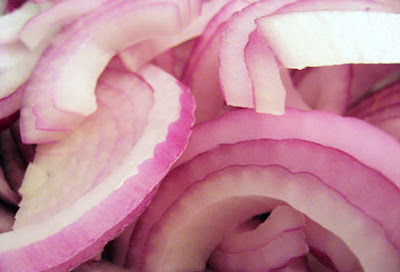
red onion diet - remove bad cholesterol
Scientists have claimed that the humble red onion could help prevent heart disease. They have discovered that the vegetable - commonly used in Mediterranean and Indian cuisine - helps remove bad cholesterol from the body, which can cause heart attacks and strokes.
At the same time red onions retain the body's good cholesterol, which help protect against heart disease. Scientists in Hong Kong fed crushed-up red onions to hamsters who had all been put on a high-cholesterol diet.
They found that after eight weeks levels of bad cholesterol, or low density lipoprotein (LDL), had dropped by an average of 20 per cent.
"This results support the claim that the regular consumption of onion reduces the risk of coronary heart disease," the Daily Mail quoted Zhen Yu Chen, who was in charge of the research carried out at the Chinese University of Hong Kong as saying.
Tags : low cholesterol diet plan,high cholesterol diet plan,cholesterol diet food,low cholesterol diet guidelines,low cholesterol diet tips 2008,cholesterol diet plans,cholesterol diet sheet
At the same time red onions retain the body's good cholesterol, which help protect against heart disease. Scientists in Hong Kong fed crushed-up red onions to hamsters who had all been put on a high-cholesterol diet.
They found that after eight weeks levels of bad cholesterol, or low density lipoprotein (LDL), had dropped by an average of 20 per cent.

"This results support the claim that the regular consumption of onion reduces the risk of coronary heart disease," the Daily Mail quoted Zhen Yu Chen, who was in charge of the research carried out at the Chinese University of Hong Kong as saying.
Tags : low cholesterol diet plan,high cholesterol diet plan,cholesterol diet food,low cholesterol diet guidelines,low cholesterol diet tips 2008,cholesterol diet plans,cholesterol diet sheet
Source: http://www.aboutthehealth.com/2010/10/red-onion-diet-remove-bad-cholesterol.html
Subscribe to:
Posts (Atom)